Categories
Things to Do

Our guide to Subiaco’s 10-day festival, Celebrate Subi

Celebrate Subi, a festival of live arts, laneway activations, pop-up spaces, and delicious food and drink, is landing in Subiaco on Friday, April 9. The festival, designed to celebrate Subiaco’s uniqueness and amazing local talent, will include over 20 free and ticketed events for visitors of all ages. From free yoga to heritage walking tours, here is a rundown of what you can expect at Celebrate Subi festival this season.

Fun Events


Doggo’s Day Out

Calling all furry friends! Pet-lovers come on down to a special pooch-friendly day at Market Square Park. Meet up with other pet owners while your four-legged besties get to know each other, and wander through the markets, with stalls for pet education, nutritious pet treats and local superstars, Shenton Park Dogs’ Refuge Home. Catch local pet-friendly favourites like Frankie Loves Barkery, Mog & Bone, Coopers Kingdom and Collar & Ruff, or enjoy some delicious human treats from vendors like Top Dog in Town and Jaffle Shack. Entry is free, so bring along your dogs or drop by to see some furry pals as Subiaco celebrates man’s best friend.

Free event
Market Square Park Subiaco
10am to 2pm on Saturday, April 10
Roberts Rd, Subiaco
https://seesubiaco.com.au/

Subi Block Party

Party the afternoon away in the Jus Burgers carpark with tropical tunes and afro-inspired beats, played live by amazing WA local musicians. Enjoy free family-friendly entertainment, with delicious bites and a fully licensed bar provided by local eatery, Jus Burgers.

Free event
Jus Burgers Carpark
From 3pm on Saturday, April 17
Corner Roberts Rd & Rokeby Rd, Subiaco
(08) 9381 1895
https://seesubiaco.com.au/

Quiz Night

Think you know your Disney movies? Maybe you’re an expert when it comes to the Marvel cinematic universe. Put your minds to the test at the Disney and Marvel Quiz Nights at Subiaco Library. Hosted by the Subiaco Voice of Youth, the City’s youth advisory council, this is a quiz designed to challenge young minds between 12 and 25 years, with questions about your favourite films, characters and movie scores. There will be plenty of sweets, pizza and over $500 in prizes up for grabs, so assemble your teams and best costumes. Entry is free, but bookings are essential so make sure that you assemble your trivia teams ASAP. Book in your team here.

Subiaco Library
5.30pm to 9pm on Saturday, April 17
237 Rokeby Road, Subiaco
(08) 9237 9216
https://www.subiaco.wa.gov.au/

Arts and Performance


Laneway Lumière

Subiaco’s historic Hiddlestone Lane is lighting up for Celebrate Subi with live music, art and light projections. Wander down the laneway and take in the beautiful artworks and images depicting Subiaco’s prominent past and the history of the Hiddleston family.

Free event
Hiddlestone Lane
7pm to 9pm on Friday April 9
https://seesubiaco.com.au/

Theatre Gardens Live by Otherside Brewing Co.

Gather in the Theatre Gardens for an evening of WA’s most talented musicians and artists, including live music from Grace Sanders and Farraday’s Cage. Bring your picnic rugs and grab a drink from the bar, courtesy of Otherside Brewing Company, as you settle in for a night of rising stars and stellar set-lists.

Free event
Subiaco Arts Centre
180 Hamersley Rd, Subiaco
6pm to 9pm on Friday April 16
(08) 9380 3000
http://ptt.wa.gov.au/venues/subiaco-arts-centre/

Corner Gallery Does Comedy

Sink into comfy armchairs with a drink from Corner Gallery and get ready for a night of laughter. With acts from local and international professionals, like award-winning UK comedian David Callan, enjoy raucous, experimental and alternative performances that will tickle your funny bone. This is an intimate gig in a unique art gallery venue that will keep the spirits high and the jokes rolling.

Book your tickets here.

The Corner Gallery
263 Hay Street, Subiaco
From 7pm on Friday, April 16
0478 030 641
https://seesubiaco.com.au/

Art in the Park

Join internationally reknowned artist Carollyn Rhodes-Thompson for a relaxing and creative art class in Subiaco’s beautiful Rankin Gardens. Whether you are a beginner or an experienced artist, everyone is welcome to enjoy the art of painting landscapes as Carollyn shares pearls of wisdom to help guide your unique pieces. Tickets include all art supplies, including paints, brushes, paper and take-home paint kit.

Rankin Gardens
138L Hamersley Rd, Subiaco
2pm to 4pm on Sunday April 11
https://seesubiaco.com.au/

Corner Gallery Cinema

Head over to the Corner Gallery for the second installment of HOMEGROWN, a showing of 6 short films from WA and Australian filmmakers. This viewing will be followed by a panel discussion with the directors of the films, moderated by Cody Cameron-Brown. Tickets include a complimentary drink to enjoy during the films.

The Corner Gallery
263 Hay Street, Subiaco
7.30pm on Thursday, April 15
0478 030 641
https://seesubiaco.com.au/

Art in April

Have you ever dreamed of bringing storied to life with your own illustrations? Join professional illustrator and award-winning artist Kelly Canby, for a workshop using watercolour paints and pencils to invent your unique characters on the page. This is a workshop suitable for artists as young as 5 years to adults.

Subiaco Library
237 Rokeby Rd, Subiaco
11am to 1pm, Tuesday April 13
https://seesubiaco.com.au/


[related-pages–two img1=”https://streetsofsubi.com.au/wp-content/uploads/2021/03/1982-Food-Coffee_Facebook_Moroccan-Chicken-Lunch-Deal.jpeg” title1=”Best weekday lunch deals around Subiaco” link1=”https://streetsofsubi.com.au/subiaco-lunch-specials-weekdays/” alt1=”chicken on a ed of kale” img2=”https://streetsofsubi.com.au/wp-content/uploads/2021/04/Your-Local-Opening_Busy_-Original-File.jpg” title2=”New gastropub opens on Rokeby Road” link2=”https://streetsofsubi.com.au/your-local-gastropub-open/” alt2=”ambient lighting in a bar with Your Local written on screens.The roof is a decorated with floral squares”]


Food and Drink


Subi Cocktail Trail

Embark on a self-guided journey to discover some of Subiaco’s finest establishments with this walking trail. With a detailed list of the signature cocktail on offer around town, you can try timeless classics and creative mixology inventions in spots like Subi Hotel, The Village Br, Old Values, Dilly Dally and Juanitas, as well as the limited-time-only pop-up bar at Blacklist Concept Store. Sip a refreshing Subi Spritz or a Passionfruit Desire while you design your own bar-hopping route through the streets of Subiaco.

Various locations
All night on Saturday April 17
https://seesubiaco.com.au/

Blacklist Pop-Up Bar

Pop down Hay Street to Blacklist Coffee Roasters Concept Store to see the coffee house transform into a contemporary pop-up bar for two nights only. Brought about by their Bali-based crew, the bar will be sharing coffee-inspired drinks and cocktails infused with the flavours of the tropics.

Blacklist Coffee Roasters Concept Store
439 Hay St, Subiaco
From 5pm Friday April 16 & Saturday April 17
https://seesubiaco.com.au/

Gnocchi Making Workshop

Learn to make your own authentic Italian gnocchi from scratch with Chef Caleb from Restaurant Caleb. Learn techniques for perfecting your dishes, and taste your creations afterwards. With a glass of sparkling wine in hand while you cook, Chef Caleb will also be teaching you to make his delicious baked tomato sauce to accompany your gnocchi.

Caleb Restaurant and Bar
23 Railway Rd, Subiaco
11am – 1pm on Saturday, April 10
(08) 9382 2208
https://seesubiaco.com.au/

Bottomless G&Ts

The Subi Hotel will be slinging gin and tonics all night as live local music keep you entertained with great tunes. Tickets include 2 hours of endless gin and tonic refills, a small platter of nibbles and an opportunity to make your own cocktail.

Subiaco Hotel
465 Hay St, Subiaco
6pm to 8pm Friday, April 9 and April 16
08 9381 3069
https://seesubiaco.com.au/


Wellness


Rooftop Ride – LA Fit X Storehouse

This is more than just a spin class, it’s a disco on wheels! Subiaco’s boutique fitness studio LA Fit will be setting up at Storehouse at Vibe Hotel for a Rhythm Ride class. This cardio workout includes supportive instructors, awesome beats, and amazing views.

Storehouse at Vibe Hotel
9 Alvan Street, Subiaco
1pm, 2pm and 3pm on Sunday April 18
(08) 6282 9000
https://vibehotels.com/


Heritage Tours


Regal Theatre Immersive Tour

Explore the jewel of Hay St, the Regal Theatre, with an immersive tour of the stage and behind-the-scenes. In this 40-minute tour, you will enjoy stories about the history of the building and the stage while you sip on a complimentary glass of sparkling wine (or similar beverage). Settle in and see the stage in action with an exclusive private performance from the Perth Academy of Performing Arts.

The Regal Theatre
474 Hay Street, Subiaco
1pm – 2.15pm on Saturday, April 17
(08) 9388 2066
https://seesubiaco.com.au/

Subi Walking Tour and Bar Hop

This tour will immerse you in the history of Subiaco and see the area as they did decades ago. Venture through the streets with talented storytellers Two Feet and a Heartbeat Walking Tours and hear tales from Subiaco’s past with rest stops at three of Subiaco’s beloved drinking holes along the way – Bistro Felix, Refuge Small Bar and Storehouse Subiaco. End the tour at Storehouse for sweeping sunset views of the City.

Meet at the Rokeby Rd entrance of Crossways Shopping Centre
227 Bagot Rd, Subiaco
3pm to 6pm on Saturday April 17
https://seesubiaco.com.au/


For Kids


Performing Arts Workshop Series

Kids can join with experts from Perth Academy of Performing Arts this school holidays to for singing, dancing and acting fun. Make new friends and learn techniques for singing, dancing and acting as you rehearse for performances for friends and family at the end of the session. Kids aged 8 – 15 are welcome. Workshops range from a couple of hours to 3 day experiences. See here to find more on workshop times and venues.

Various locations
Various times
0477040940 or 0434962429
https://www.perthapa.com/school-holidays

Exhibitions


Sheree Dornan Art Exhibition

Filled with colour and light, local artist Sheree Dornan is exhibiting her stunning semi-abstract artworks at Home Base Subiaco. With art pieces exploring multiple mediums, including painting, textiles, digital surface design and garments, her work is full of texture, golden accents and motifs of nature, land and space. The exhibition is on show throughout the Celebrate Subi Festival, from April 9 to April 18, with opportunities to Meet The Artist available during that time.

Free event
Home Base Subiaco
55 Salvado Rd, Subiaco
Exhibition from April 9 to April 18
Gallery hours are 9am to 5pm Mondays – Fridays; 8.30am to 5pm Saturdays; 10am to 4pm Sundays
(08) 9388 1088
http://www.homebaseperth.com.au/


See more tours and attractions around Subiaco


[widget-v2-html]data-prop-widget-view=grid data-prop-region=everywhere data-prop-type=attractions [/widget-v2-html]


Categories
Arts & Culture Eat & Drink Things to Do

Cooking with Opera, a festival of culinary delights dedicated to the opera greats, announced for March & April

Cooking with Opera is back for the second year to delight Subiaco with culinary wonders and the rich artistry of opera. In a collaboration between See Subiaco and West Australian Opera, this month-long dedication to the art of opera and the dishes inspired by those operas is launching Monday, March 15.

After the success of Cooking with Opera in 2020, the event will run from March 15 – April 15 this year, with multiple sumptuous treats and activities to try. Eateries will be serving up delightfully crafted dishes that pay homage to the music, artists and composers of this classic art, as visitors enjoy activations immersing them into the world of opera. Essentially, the month will see multiple Subiaco restaurants and cafes showcase limited edition, opera-inspired menu items. Alongside this will be a video series documenting the processes and inspirations behind each of these amazing culinary delights.

Revel in the storytelling aspect of both food and opera, as you discover the tales behind dishes, such as decadent Donizetti cake – created in the kitchen of notable composer, Rossini’s kitchen in order to mend the broken heart of another of Italy’s most famous composers, Gaetano Donizetti.

This year, indulge in a scoop of mozartkugel icecream, a twist on the classic chocolate and marzipan ode to Mozart, produced by Whisk Creamery, or attend the opera-themed high tea at Eli and Matt’s Patisserie complete with Rossini-inspired macrons. In honour of Australia’s beloved queen of opera, Dame Nellie Melba, Boucla cafe will be serving up fried halloumi drizzled with honey coupled with Greek salad and served on Melba toast. For dessert, they are whipping up Basque cheesecakes with Melba toast crumble and Melba peaches. Boulca’s series comes just in time for Melba Toast Day on March 23. Other participating eateries include Cherubino City Cellar, Dilly Dally or Galileo Buona Cucina so be sure to pop in to see what delights they have cooked up this season.

If you want to be a part of the action, take part in an Italian cooking class at the Multicultural Language Centre, where cooks will recreate two amazing opera-themed dishes, along with dishes from Woodpeckers and The Storehouse.


More events in Subiaco

[widget-v2-html]data-prop-widget-view=grid data-prop-widget-mode=discover data-prop-region=everywhere data-prop-type=events data-prop-features=10493 [/widget-v2-html]

Categories
History of Subi

A new chapter in the journey from Australia’s best known China ware maker to China Green

The land at the western end of Roberts Road where it meets Hay Street was the site of one of Australia’s best known china ware manufacturers.

From 1921, when it opened as Calyx Porcelain and Paint Company, it went on to making specialty designs – Wembley Ware, Bristile, Australian Fine China, Franklin Mint, Redback Pottery, McGregor and Collections.

Calyx used raw materials from around the State – clay from Goomalling, Silica (or very fine white river sand) from Wanneroo, Felspar (or white rock) from Coolgardie and local Alumina, which was sent to Japan to be refined before returning to Perth in a usable form.

The bones for the ‘fine bone china’ came from Fremantle Abattoirs, by the truckload. Motifs were painted on by hand.

Over the Calyx period from 1921-1941 and in addition to the utilitarian wares, the factory produced fine and uniquely beautiful pieces that are highly valued, highly collectable and highly priced today. In fact, all Calyx Ware is desirable to the collector or investor.

The company struggled during the war years and HL Brisbane and Wunderlich Ltd (co-owned by Sir Lance Brisbane) first leased, then purchased the Calyx Porcelain Works in 1945, changing the name of the Subiaco based porcelain division to Bristile China.

Between 1945 and 1950 the factory underwent modernisation and expansion and by 1953 was in full production.  At a time of recovery from WW2, a buoyant economy and happy consumers, a new product line was introduced.

This ‘Fancy Ware Range’, called Wembley Ware, became “Australia’s largest range of commercially-produced ceramics” in the 1950s.  Wembley Ware was produced from 1946 to 1961 and was sold nationally and in New Zealand.

1992 saw ownership of the parent company Bristile Ltd changed to Futuris Ltd and a change of name to ‘Australian Fine China’.

However, despite their 99-year lease not being due to expire until 2020, time was running out for this iconic Western Australian ceramic production site and in 2006, after 85 years, it was all over.

The kilns and factories were demolished in 2006, making way for new residential and commercial buildings.

Orchard Terrace Apartments

Now known as China Green, the site incorporates small cluster developments – Indigo Rise, Viridian, Botanical, Orchard Terrace Subiaco, and Element 27, each with their own facilities. It borders Subiaco Common, a very attractive lake park and amenity for residents.

There are many mementos and tributes to the area’s origins in sculptures representing China plates and other factory aspects, information plaques, and framed, glass-covered old photos of the factory and processing areas. These are dotted around the precinct and make a nice trail ending at the Common.

Ironically, Australian Fine China is now made in China.


Sources: Talk about Subi newsletter, City of Subiaco, Issue 3, 2001; Archives File, Wembley Ware Society (founded in 2010)
Images: Archives File, Wembley Ware Society (founded in 2010)


Subi’s historical sites and museums

[widget-v2-html]data-prop-widget-view=grid data-prop-region=everywhere data-prop-type=museums [/widget-v2-html]
Categories
0. Home Carousel History of Subi History of Subi Highlights

Celebrating 100 years of family-owned Hiddlestone Electrics, keeping the lights on in Subi

In 1920, the modern wonder of electrification had not long come to households and businesses in Perth. At a time when the town of Subiaco itself was a recent incarnation, a young Howard Hiddlestone saw the potential to service this exciting new utility and established H. Hiddlestone Electrics in the hope of building a successful business.

In 2020, his hope has certainly come to fruition with the family business still flourishing and celebrating 100 Not Out, the title of the Hiddlestone chronicles recently published and launched in September 2020.

The business has had a few name changes from H. Hiddlestone to Hiddlestone Brothers when young sibling Cec was old enough to join the business, then Hiddlestone Electrics in 1956 when Cec’s son Vern joined the company.

The business moved several times within Subiaco, with two locations at different Rokeby Road addresses, Denis Street, and since 2005 at 30 Townshend Road.

The 85 Rokeby Road period 1956 – 1998 was a large retail shop with all things electrical – irons, kettles, radios, lamps, globes and a myriad more.

Always an electrical contracting company, this was a step forward from a sideline of tyre re-treading that the fledgling business offered to support the electrical side in the early days. The family was glad to be rid of the acrid smell of burning rubber!

Today, daughter Natalie runs the business after spending much of her time working in it through her childhood, teenage years and then as an employee, as did her sister Kelly. At one point Natalie had to choose between a successful professional photography business and going into the family business.

Known and valued by many families across generations in Subiaco, their business is almost solely word of mouth and long-time customers often just drop in for a chat.

The office resembles a museum of early electrical goods from all the Hiddlestone reincarnations through two world wars, depressions and boom days. You also need to duck when the two cheeky Willy Wagtails flit through and play together.

Notable among the Hiddlestone lighting installations is the original Regal Theatre building (previously the Coloseum Gardens and before that Goulds’ Drapery), especially as there were no impact drills with diamond chipped chisel bits to get through the very thick concrete walls.

Hollywood Hospital was another huge job, as was the lighting installation for the re-developed China Town in Northbridge. Maintenance contracts with the WA Museum and WA Art Gallery are current prestigious clients alongside their local customers across Subiaco who comprise 95% of their business.

You can see some of Hiddlestone Electrics’ handy work in the lighting of Hiddlestone Lane, running from Rokeby Road through to Rowland Street along the side of their properties 83-85 Rokeby Road.

The results of their recent Community Art Project at the rear, which they did in partnership with 500 students from Subiaco Primary School, is a delightfully decorated wall of dragonflies.


Sources: 100 YEARS NOT OUT, Ross Addison, published 2020; Talk about Subi newsletter, City of Subiaco, Issue 3, 2001; Natalie Hiddlestone

[sd-rec-top-start title=”Subiaco’s original corner store turns 125″ url=https://streetsofsubi.com.au/subiaco-history-corner-store/][sd-rec-top-more title=”The Benedictine stables: Subi’s first colonial building” url=https://streetsofsubi.com.au/historical-benedictine-stables-subiaco/][sd-rec-top-end]


Historical sites and museums around Subi

[widget-v2-html]data-prop-widget-view=grid data-prop-region=everywhere data-prop-type=museums [/widget-v2-html]
Categories
0. Home Carousel History of Subi Shop Shop Highlights

Bstore: an icon of Rokeby road turns 19

Picture this: it’s 2001, the Witch’s Cauldron is going strong in its 30th year, Brew-Ha has just opened the first coffee roaster and cafe and Subi Centro isn’t even a thing yet.

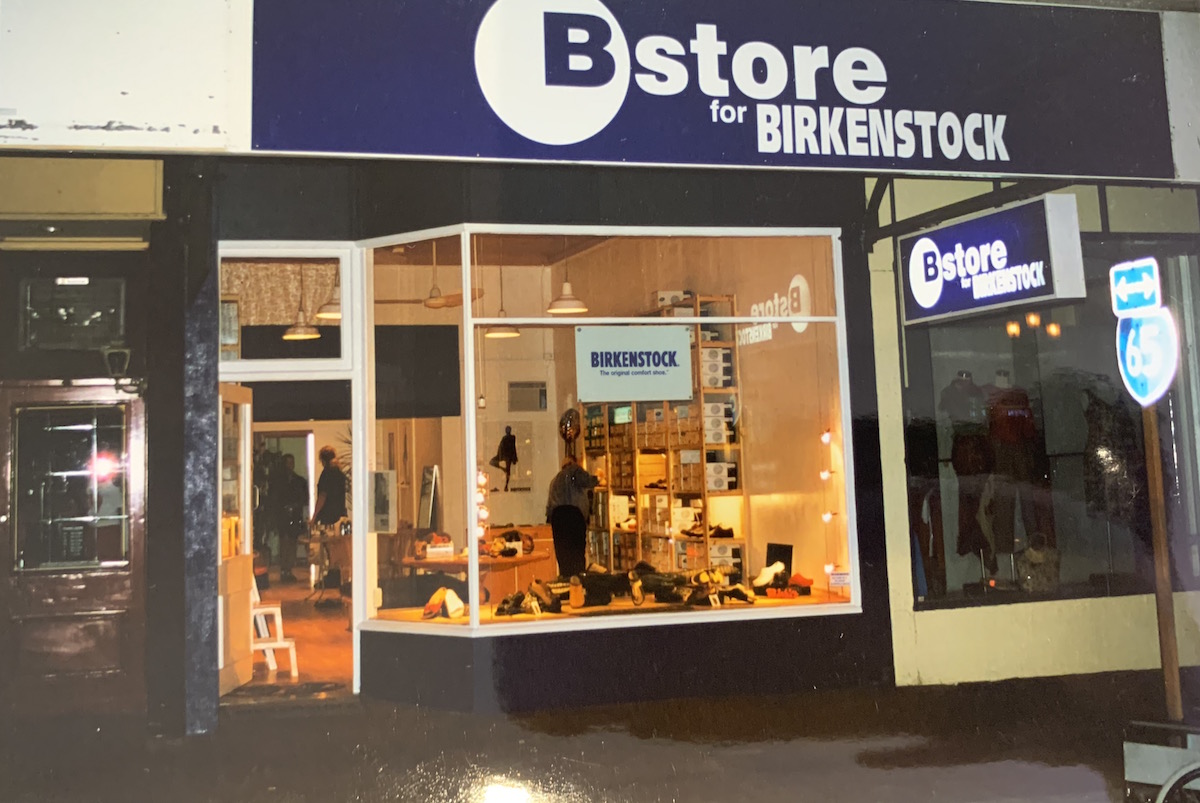
Seems like a while back, right? Well, that’s also the year Bstore opened up shop on Rokeby road. Opened by local Mike Edmiston, the store was WA’s first venture into the world of Birkenstocks. It was no accident that he chose Subiaco as its location, as it fit right in with the trend of specialty retail stores that flooded Rokeby Road. A distinctly European-style shoe at the time, it was a big leap into the unknown, as Mike wasn’t sure if they would take off in Australia,

“I was excited and nervous, I didn’t know if people were going to be interested enough in Birkenstocks.”

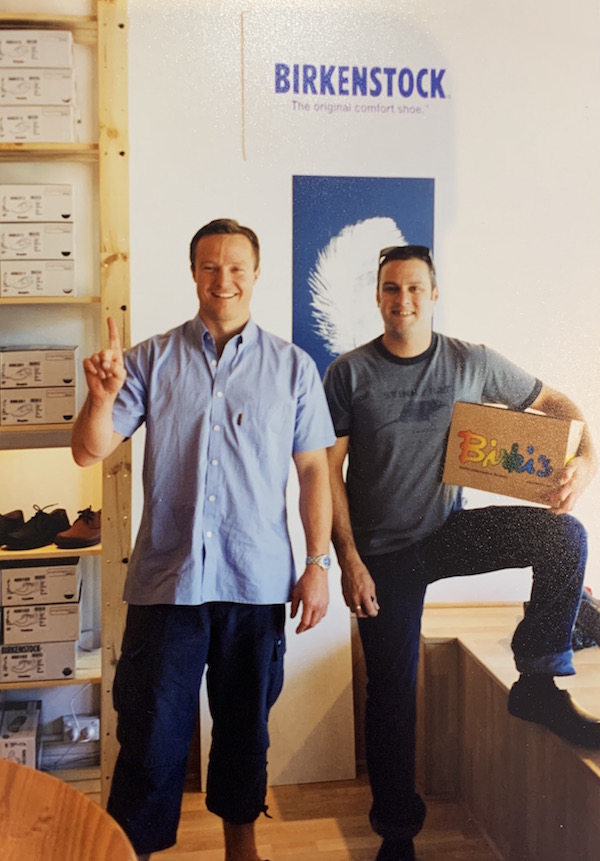
The nerves seemed to pay off though, as he remembers his first ever customer being absolutely stoked that they’d opened up. Pictured below, the customer was a chef who had been searching for clog-like shoes to wear in the kitchen, and was battling to find them anywhere in Perth. Luckily, he stumbled upon Bstore while spending the day wandering Rokeby road and picked up a pair of their iconic Profi style, which ironically remains as their most popular shoe today.

Although this was his first dive into the Birkenstock game, it was not his first for shoes, nor Subiaco. Prior to opening Bstore Subiaco, Mike was a regular stall at the iconic Railway Markets in the 90s, selling a unique (and now discontinued) brand of sandals that he came across when travelling Africa at age 21. Mike sold the sandals for a few years before moving on to start his own shoe project, and with that, Bstore was born.

19 years on, the shopfront has stayed true to its original style, with the original under awning sign remaining today. Ironically, the timeless exterior of the store echoes the style of Birkenstock itself; a shoe that has somehow stayed at the forefront of fashion for decades, which is a pretty remarkable feat.

Bstore Subiaco
21 Rokeby Road, Subiaco
Mon-Wed & Fri 9am – 5:30pm, Thurs 9am – 8pm, Sat 9am – 5pm, Sun 11am – 5pm
https://www.bstore.com.au/

Categories
0. Home Carousel Arts & Culture History of Subi

The historical Benedictine Stables of Subiaco: 170 years and still standing

Recently restored, the Benedictine Stables is the oldest remaining building from the time of European settlement in Subiaco.

The area of Subiaco was not settled by Europeans until 1851, some 22 years after the founding of the Swan River Colony. While the distance from the Swan River colony was not great, trekking inland through the bush was hard work, which is why most early development followed the coast and banks of the Swan River. In 1859, the Benedictine monks from Subiaco in Italy established the Benedictine Monastery of New Subiaco, from which the suburb draws its name.

The Stables are the last remaining structure of the Monastery and underwent restoration for the first time in 2019. Through an $80,000 State Heritage Council grant, Subiaco’s earliest agricultural building has been restored to that of its former grandeur.

The Stables has a rich history. Upon arrival, the aim of the Benedictines was to bring Christianity to the Aboriginal people and provide a place of worship for European settlers. The Monastery was built as a base for operations and as a shelter. The monks planted gardens of grape vines, olive trees and a lemon orchard around the Monastery, which explains the historical significance of olive trees in Subi’s streets today. Missionary work declined when one of the prominent monks, on orders from the Vatican, was sent to New Norcia Monastery. By 1864, all the monks had followed suit and relocated to New Norcia.

Remaining unoccupied for several years, the site was later repurposed in the early 1870s as St Vincent’s Boy’s Orphanage. In 1901, the boys orphanage moved to Manning and the grounds were taken over by the Sisters of Mercy, who then re-established the site as St Joseph’s Girl’s Orphanage for Aboriginal and European children. During this time the monks’ original olive tree plantings were put to use to produce award-winning olive oil, with the resulting profits used to keep the orphanage running. Many of these olive trees are still standing and are over a century old.

Contrary to a lot of restoration projects, tradespeople were asked to skill-down in an effort to accurately recreate the original quality of the historical building,

“The Stables was most likely built by the Benedictine monks, novices or other assistants with little, if any, stone-masonry or carpentry skills or experience” MercyCare major capital projects manager Adam Roebuck stated.

Conservation work that was undertaken included roof framing repairs, reconstruction of the face-brick chimney, roof cladding, plumbing reconstruction and exterior wall restoration including removal of cement mortars. Work completed over a six-month period by MercyCare and Bernard Seeber Architects saved the building’s integrity, which was predicted to have only 10 years left before falling to ruin.

Next-door to the Stables is a historic schoolhouse. Built in 1892 and officially opened the following year by the Bishop of Perth, it had dual use as a schoolhouse and chapel for the St Vincent’s Boy’s Orphanage and later the St Joseph’s Girl’s Orphanage. The girl’s orphanage closed in 1971 and the building sat unused until 1989, when it became the Catherine McAuley Centre, a foster care centre for kids who were wards of the state.

Although the Stables lie just North of Subiaco in Wembley, they stand as a significant part of the city’s history.

As the site is now home to a retirement village, public viewing is currently restricted, with the site set to re-open in December 2020. There will be tours from time to time so keep an eye on the MercyCare Facebook page for more information.

Benedictine Stables at MercyCare
18 Barrett Street, Wembley 
(08) 9442 3408
https://www.facebook.com/MercyCareWA/


Sources: Thematic History and Framework [report], prepared by Kristy Bizzaca, City of Subiaco, published 2014; A look at the Sister Martin Kelly Centre [article], prepared by Mercycare, published 2018; Images courtesy of Bernard Seeber.


See more museums and historical sites in Subi

[widget-v2-html]data-prop-view=grid data-prop-region=everywhere data-prop-type=museums[/widget-v2-html]

Categories
0. Home Carousel History of Subi History of Subi Highlights

Subiaco’s original corner store still standing after 125 years

The corner store was once the heart of Australian suburban life. Popping in for some bread, milk and a copy of the daily paper was part of most families’ weekly routines. Despite being lost in the age of modern supermarkets, many of the original corner store buildings stand as nostalgic reminders of a forgotten suburbia.

The W.G Marriott Family Grocer opened on the corner of Hay Street and Thomas Street in 1895. Like many other pre World War One builds, the corner store was attached to a residence where the grocer and his family lived. At this time, Subiaco was experiencing rapid residential development and the small store would have supported the growing local community in their need for household essentials.

Without motor vehicles, most residents of Subiaco would walk over to the corner store to pick up vegetables, tea, preserved meats, sweets, newspapers, liquor, soaps and other goods. Shop assistants would stand behind the counter and package the customer’s items into paper bags for them while having a yarn about the local neighborhood.

By the 1930’s, Subiaco was a well-developed inner-city suburb. The corner store had changed owners five times over the course of 30 years but continued to operate as a neighbourhood grocer. Situated beside the tram tracks that connected Subiaco to the rest of Perth, and neighbouring terrace houses that still exist today, the grocer occupied a prominent position within the suburb’s 1930’s streetscape.

During this period, Subiaco’s low paid workers and tradespeople lived in modest timber houses, mainly concentrated in the area to the north of Bagot Road, while professional men and their families lived in federation style brick houses on larger lots towards the south and south-east of the suburb and along Thomas Street. Unfortunately for them, the poorer workers had to pass the corner shop on their way to their jobs in the richer parts of town, picking up their groceries from the store on their way home.

Despite regularly changing ownership, the building continued to operate as a corner store until the early 1980’s, when it was turned into a liquor store. In 1992, Acton Real Estate moved into the building and the company remains there today. While the building isn’t used as a corner store anymore, it retains its original structure, reminding generations of Subiaco locals of suburban memories.

Sources: Heritage Assessment of Corner Stores in Subiaco, prepared by Annette Green, City of Subiaco, published 2015; Images courtesy of ACTON Central.


See the museums and historical sites of Subi

[widget-v2-html]data-prop-view=grid data-prop-region=everywhere data-prop-type=museums[/widget-v2-html]

Categories
0. Home Carousel History of Subi

Subiaco trams of old: running from the city through Subiaco to the Nedlands baths

At the turn of 1900, trams were introduced to Subiaco. Travelling along Hay Street and turning left onto Rokeby Road where the Subiaco Hotel is, the trams transported the city slickers into the industrial area that was Subiaco.

Credit: State Library of Western Australia <136055PD>

Following on through the high street, the tram would come to a final stop at the Saw Avenue entrance to Kings Park.

By 1908, the neighbouring suburb of Nedlands was in the works, and the developers were keen to have the tram extend its route to what was then called the Nedlands Baths, a closed off swimming area in the Swan River. This route was particularly popular for students of Subiaco and Rosalie Primary School, as they used the baths for swimming lessons. The site is now a mini marina and jetty leading to JoJo’s restaurant on the Nedlands foreshore.

Credit: State Library of Western Australia <136059PD1>

Going halves in the cost, both Claremont and Subiaco municipalities financed the building of the roads for the tram route, including parts of Thomas Street, Aberdare Road and another road straight through where Sir Charles Gairdner Hospital now is, before finally connecting back to Hampden Road and Broadway. These streets and the tramline in turn served as a boundary lines between the suburbs of Subiaco, Nedlands and Claremont.

Sadly, these tram services ceased in 1958. However, the hop-on hop-off Subiaco ‘tram’ service follows some of the original route, such as down Hay Street and Rokeby Road.

Sources: Identity Prized: A History of Subiaco (1985), Ken Spillman
Talk about Subi newsletter (2003), City of Subiaco


Subi’s museums and historical sites

[widget-v2-html]data-prop-widget-view=grid data-prop-region=everywhere data-prop-type=museums [/widget-v2-html]

Categories
History of Subi History of Subi Highlights

A brief history of Subiaco

Subiaco has a rich history including thousands of years of use by the Noongar people and then European settlement in 1851, development as a working-class, industrial area to the flourishing, cosmopolitan suburb of today.

For thousands of years, the Noongar people of the South-West of WA have owned the land on which we stand, including the streets of Subiaco that we now call home. Although there was an influx of white settlement from the 1800s onwards, the Whadjuk Noongar people are acknowledged as the traditional owners of the land.

In terms of European history in Subiaco, a group of Benedictine monks were the first European settlers in the area back in 1851. Named after the Italian town of Subiaco, the monks established a monastery called New Subiaco North, which was the first building erected in the area.

The monks had the area almost entirely to themselves until 1881, when the railway connecting Perth and Fremantle was built. An industry and retail ‘boom’ ensued, with business owners choosing Subiaco over Perth due to the cheaper land prices. Named after the New Subiaco North monastery nearby, the Subiaco railway station was built, and the surrounding houses and businesses followed suit, establishing the area’s name as Subiaco.

A combination of the Kalgoorlie gold rush and a depression over east resulted in a population boom for Subiaco in the 1890s. Subdivision of land in the area occurred to encourage and make way for the influx of people moving in. Finally, in 1897, Subiaco was proclaimed a municipality and Rokeby Road was the clear high street.

At the turn of the century, the council set up the land near the railway station as an area for secondary industry, resulting in great industrial growth and establishing Subiaco as a young, working-class suburb. Many of the original homes built at that time remain today.

Officially named City of Subiaco in 1952, Subiaco faced the threat of boundary changes from surrounding suburbs only a few years later. Support from residents and business owners as well as local politician Tom Dadour resulted in Subiaco keeping its boundaries.

In the years following, there was much disagreement over how to manage Subiaco. Infrastructure was falling apart, the streets were filled with rats and flies and many high-rise flat complexes were being built, tainting Subiaco’s image as a residential city. Some residents were keen to demolish the city and start from scratch, while some were adamant that maintaining the old world charm was imperative in rejuvenating the area.

Throughout the early 1970s, many stand-alone houses were demolished to make way for flat complexes and commercial buildings. However, after a change of guard in Council in 1978, the town planning shifted in an effort to maintain the city’s historical character and charm. Laws were implemented to conserve heritage buildings, the quaint laneways were fixed up and street waste removal was implemented to improve the city’s aesthetics. Ergo, land prices and Subiaco’s reputation improved drastically throughout the 1980s.

Following on from this rebrand of Subiaco, the city’s historical industrial areas were redeveloped to fit the more upmarket vibe of the city. Many of the industries were redeveloped into residential areas with the help of the Subiaco Redevelopment Authority (SRA, est. 1994). The SRA are responsible for what we now know as Subi Centro, as they led the project to sink the original railway line and build a new station to allow for residential and commercial developments in its original spot.

Subiaco continues to evolve to this day. Read more on the history of Subiaco on our history page.


Museums and historical sites of Subi